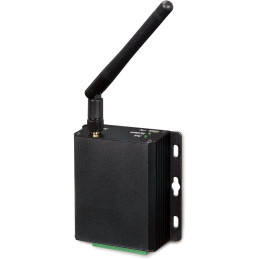
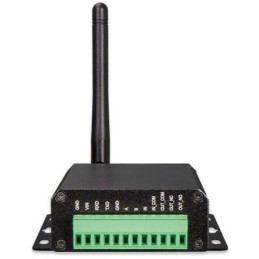
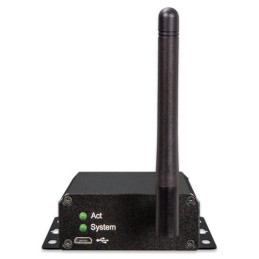
PLANET LN1152
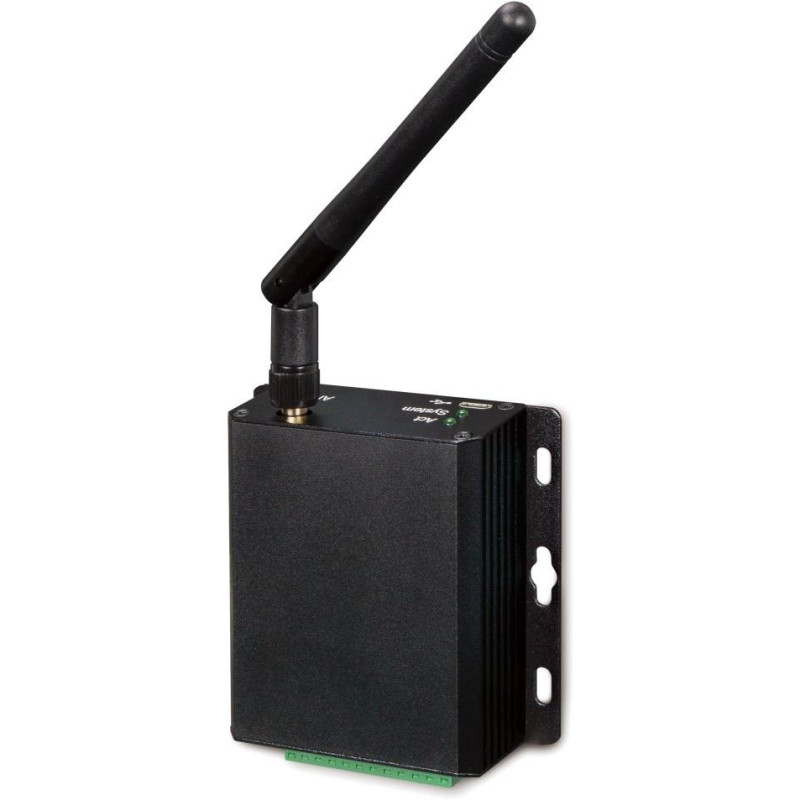
Indoor LoRa node controller, which is used to collect data from multiple sensors. It contains various input/output interfaces, including analog inputs, digital inputs, relay outputs and serial ports, which simplify deployment and replacement in LoRaWAN networks. In addition, the LN1152 can trigger various conditions and actions without a network.
With its industrial design and IP30 metal housing, the LN1152 has wide applications in indoor applications such as smart industry, building automation, etc.
Communication interface:
- 1x digital input, 1x digital output, 1x RS-232, 1x RS-485
- microUSB configuration (PC software)
The LN1152 LoRaWAN controller, with built-in numerous industrial interfaces , connects to all types of sensors, meters and other devices . It also bridges Modbus data between serial and Ethernet networks via LoRaWAN. The LN1152 supports LoRaWAN Class C protocol to be fully compatible with standard LoRaWAN gateways, including PLANET LCG-300 (LCG-300W) series. It is ideal for large-scale deployment of IoT applications, such as building automation projects, smart metering, HVAC system, etc. With multiple interfaces, this LoRaWAN controller can perfectly help to upgrade legacy assets to IoT-enabled form.
- Easy connection to multiple wired sensors via GPIO/RS-232/RS-485 interface
- Extremely long distance transmission (up to 10 km with direct visibility)
- Triggers various conditions and actions
- Built-in watchdog for operational stability
- Industrial metal housing design with wide operating temperature range
- Compatible with standard LoRaWAN gateways and network servers
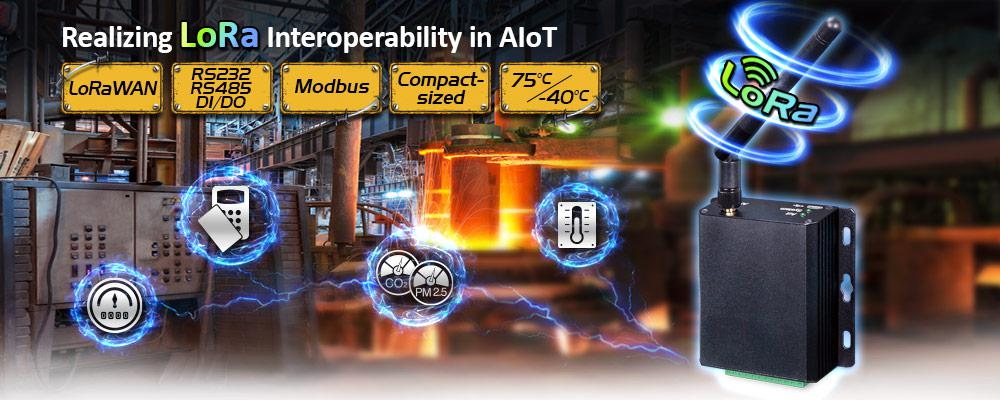
BASIC SPECIFICATIONS
Physical properties:
Interface: 1x microUSB (configuration), 3.5 mm terminal block (1x digital input, 1x digital output, 1x RS-232, 1x RS-485)
Design: wall-mounted
Power supply: external DC 5-24 V adapter (adapter included)
Operating temperature: -40 to +70 °C, humidity up to 95%
Dimensions: 79 x 60 x 24 mm
Supported LoRaWAN bands:
LN1152-868: IN865, EU868, RU864
LN1152-915: US915, AU915, KR920, AS923
Working mode - OTAA/ABP Class C
 Manual
 Other downloads
LoRa is one of the wireless network protocols used in the world of IoT (Internet of Things).
LoRaWAN (Long Range Wide Area Network) is another low-power wireless network protocol designed for low-cost and secure two-way communication in the Internet of Things. It uses a band up to 1 GHz and the transmission rate is then from 0.3 kbps to 50 kbps.
Communication between end elements and gateways is spread across different frequency bands and data rates. The choice of data rate is a compromise between communication range and message length. Individual communication streams with different data rates do not interfere with each other (due to spread spectrum technology) and create a set of “virtual” channels to increase the capacity of the gateway.
To maximize the end device battery life and overall network capacity, the LoRaWAN network server manages the transmission rate and RF output for each end device individually, through an adaptive data rate (ADR) system.
LoRaWAN distinguishes several classes of devices:
class A – end devices support bidirectional communication (each uplink is followed by two data reception windows)
class B – in addition to the "forced" downlink of class A, devices of this class open extraordinary receiving windows at a set time
Class C – reception windows are open almost continuously and close only when transmitting